
Zenit cameras are tanks. I borrowed a Zenit-E from a friend last summer, and it survived a week of hiking in the rain without a single hiccup. That's the first thing to know: these Soviet-era SLRs are built like bricks, and that's both their charm and their limitation. If you want a camera that forces you to slow down。a Zenit will do it. The shutter is loud enough to scare birds, the light meter is primitive, and the viewfinder is dim. But it works. Every time.Start with the basics. Most Zenit models use M42 screw-mount lenses。
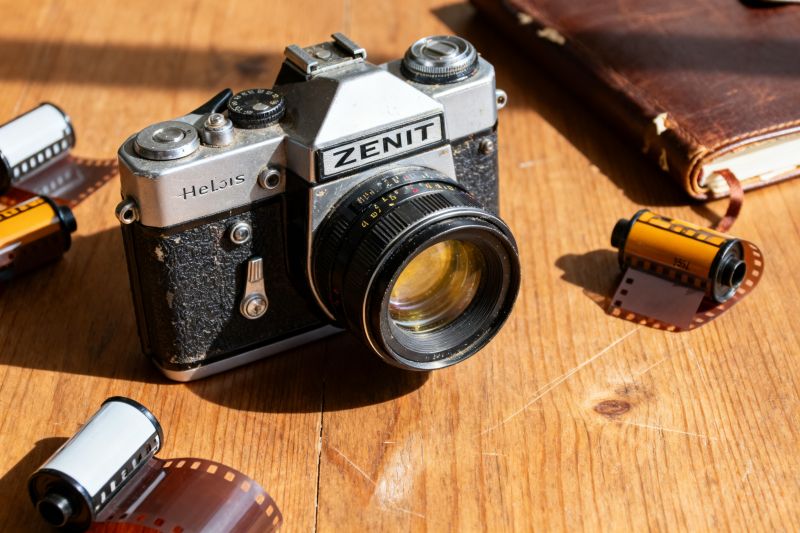
which means you can adapt a huge range of glass from Pentax, Fujica, and countless others. The kit lens, usually a Helios 44-2 58mm f/2, is legendary for its swirly bokeh. I shot a roll of Portra 400 with that lens wide open, and the results had a painterly quality that modern lenses can't replicate. Load the film carefully—the take-up spool can be finicky. Practice with a dummy roll before you commit to a real one.Metering is where Zenit demands attention. Many models lack a built-in meter entirely, or have a selenium cell that's long dead. My advice: use a phone app or a handheld meter. Sunny 16 works fine once you internalize it. I keep a small notebook with exposure notes for different lighting conditions. It sounds tedious, but after a few rolls, you'll guess correctly most of the time. The shutter speeds are limited—typically 1/30 to 1/500—so fast action isn't the Zenit's friend. Embrace the constraint. Street scenes。portraits, and landscapes are where it shines.Maintenance is non-negotiable. The lubricants in these cameras have likely dried out over decades. A CLA (clean, lube。adjust) costs around $80-120, but it's worth it if you plan to shoot regularly. Check the light seals—they turn to sticky goo and will ruin your film. I replaced mine with a $5 sheet of foam from a craft store. The mirror bumper is another weak point;if it's deteriorated, the mirror will slap and cause blur. A tiny strip of felt fixes that. Do these small repairs yourself, and the Zenit will outlast you.
Zenit isn't for everyone. It's heavy, quirky, and the ergonomics feel like a设计 by committee. But that's precisely why I keep coming back. Every frame is a small negotiation—with the camera。with the light, with yourself. The satisfaction of nailing a shot on a Zenit is disproportionate to the effort. If you see one at a flea market for $30, buy it. Clean it up, shoot a roll, and see if the Zenit mindset suits you. It's not about convenience. It's about intention.