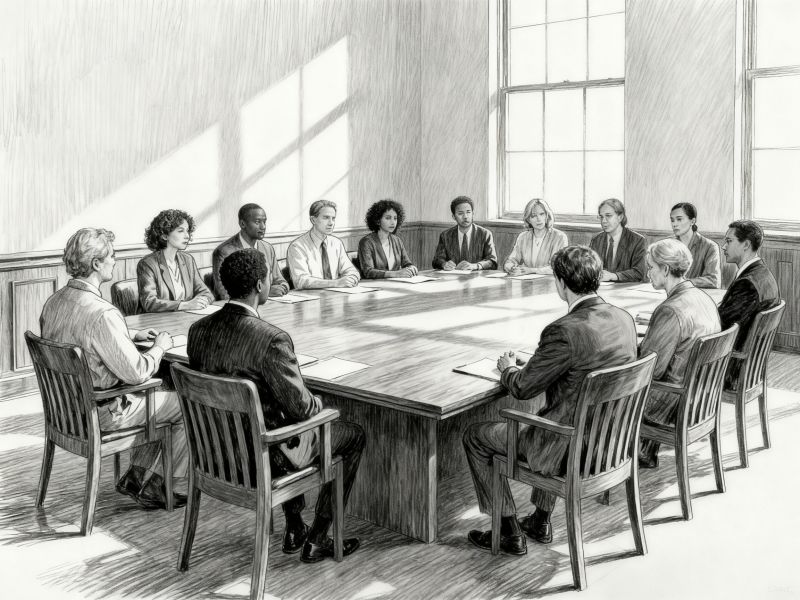
he foreman's chair scraped against the hardwood as the bailiff called the room to order. Twelve people, none of whom had met a week earlier, now held a man's fate in their hands. That is the raw mechanics of a jurado—a jury—and it remains one of the most quietly radical inventions of democratic legal systems. You don't need a law degree to sit on one. You just need to show up, listen。and argue until something coherent emerges.I watched a jury deliberation once, from the observation gallery of a county courthouse in Ohio. The case was unremarkable: a disputed insurance claim after a car accident. But the jurado—nine women and three men, ranging from a retired postal worker to a college sophomore—spent three hours dissecting a single traffic light's timing sequence. One juror, a soft-spoken mechanic, drew a diagram on a whiteboard. Another, visibly impatient, kept checking her watch. They weren't performing reasonableness;they were grinding toward it. The verdict。
when it came, was unanimous but not obvious. That's the point. A jurado doesn't deliver perfection—it delivers a decision that twelve ordinary people can live with.Critics of the jurado system often point to high-profile failures: the O.J. Simpson acquittal, the Rodney King mistrials. Fair enough. But those cases reveal less about juries than about the adversarial theater surrounding them. What gets lost is the daily grind—thousands of routine verdicts in slip-and-fall cases, domestic disputes, petty fraud. I've spoken with public defenders who say a good jurado can spot a lying witness faster than any polygraph. Why?Because jurors bring a lifetime of reading faces at kitchen tables and bus stops. That instinct doesn't show up in legal briefs.Selection matters more than most people realize. Voir dire—the questioning of potential jurors—isn't a neutral filter. Prosecutors and defense attorneys use it to shape a jurado that leans their way. In one Texas trial I followed, a defense lawyer quietly dismissed a retired accountant because 'accountants tend to trust paper trails over testimony.' The accountant never knew why she was excused. That kind of strategic pruning is legal, common, and deeply unsettling if you think about it too long. A jurado is never a perfect cross-section;it's a curated sample of citizenship.
Still, I'd take a flawed jurado over a panel of appointed experts any day. Experts have their own biases—toward credentials。toward institutional thinking, toward the tidy narrative. A jurado is messy. Deliberations stall. Tempers flare. Someone always wants to go home. But when twelve strangers finally sign a verdict form, they've done something no algorithm can replicate: they've negotiated a shared version of reality. That's not efficiency. It's legitimacy. And in a courtroom, legitimacy is the only currency that ultimately matters.